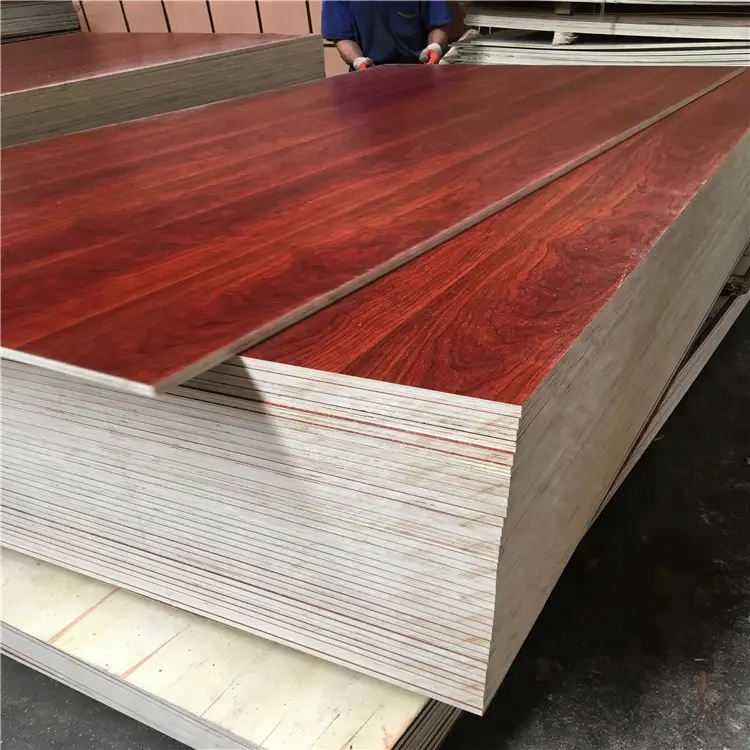
Medium Density Fibreboard is strong enough for most indoor furniture when thickness, span, joint design, and moisture exposure are controlled. USDA data for 8 commercial MDF products reported densities of 710–950 kg/m³, bending strength of 23.2–39.3 MPa, and modulus of elasticity of 2.98–4.38 GPa. Face screw-holding capacity ranged from about 1.45 to 2.27 kN, generally higher than edge holding. An 18 mm panel works well for many cabinet parts, while long shelves often need 22–25 mm material or added support. MDF performs well in furniture, but stiffness and joint design usually matter more than maximum breaking strength.
MDF is made from refined wood fibers bonded under heat and pressure, so its structure is more uniform than solid timber and conventional particleboard. The USDA Forest Products Laboratory lists commercial MDF densities around 0.71–0.95 g/cm³ in an 8-product dataset, equivalent to 710–950 kg/m³. That density explains why a full 18 mm MDF cabinet panel feels noticeably heavier than many plywood panels of the same dimensions.
The same USDA sample showed modulus of rupture values from 23.2 to 39.3 MPa and modulus of elasticity from 2.98 to 4.38 GPa. Bending strength tells how much stress a board can take before failure, while modulus of elasticity describes how resistant it is to bending. Furniture usually reaches an unacceptable level of sag before it reaches its laboratory breaking point, so both figures matter.
A current commercial reference gives a useful comparison across thicknesses. A 2025 EGGER raw MDF technical sheet lists bending strength at 23 N/mm² for boards above 6–9 mm, 22 N/mm² above 9–12 mm, 20 N/mm² above 12–19 mm, and 18 N/mm² above 19–30 mm. The listed bending modulus moves from 2,700 to 2,100 N/mm² across those groups.
| MDF property | Typical published range or example | Furniture relevance |
|---|---|---|
| Density | 710–950 kg/m³ | Affects weight, machining and stiffness |
| Bending strength | 23.2–39.3 MPa in an 8-board USDA dataset | Relevant to shelves and tops |
| Bending modulus | 2.98–4.38 GPa in the same dataset | Helps predict deflection |
| Internal bond | 0.71–1.94 MPa | Indicates through-thickness bonding |
| Face screw holding | 148–231 kg in USDA test data | Important for fittings and hardware |
| Edge screw holding | 114–184 kg | Usually lower than face holding |
The table also shows why “How much weight can MDF hold?” has no useful single answer. A 600 mm shelf and a 1,200 mm shelf made from identical 18 mm MDF do not behave alike. In simple beam behavior, deflection changes approximately with the cube of span when other conditions remain constant; doubling the span can therefore raise calculated deflection by roughly 8 times.
Thickness works in the opposite direction. For a rectangular panel, bending stiffness is strongly related to thickness cubed, so moving from 12 mm to 18 mm increases the geometric second moment of area by about 3.38 times. Moving from 18 mm to 25 mm produces roughly a 2.68-fold increase from geometry alone. Actual furniture performance will also depend on panel grade, supports, load position, and connections.
For shelving, span is often more useful to manage than simply adding more MDF. A 900 mm-wide shelf carrying books may perform better with an added center divider that creates two 450 mm spans than with a small increase in panel thickness. A front timber strip, metal rail, fixed back edge, or vertical partition can also increase resistance to long-term sag without making every component heavier.
Long-term loading deserves separate attention because wood-based panels creep. A shelf holding 25 kg for several years can develop more deflection than the same shelf measured immediately after loading. Relative humidity also changes panel moisture content. In a 2008 Forest Products Laboratory study, fiberboards were conditioned at 50% and 90% relative humidity so researchers could examine how moisture, density, resin level, and thickness affected bending behavior.
Moisture also affects dimensional stability. The 2025 EGGER data sheet reports 24-hour thickness swelling values of 17% for boards above 6–9 mm, 15% for 9–12 mm, 12% for 12–19 mm, and 10% for 19–30 mm under the specified EN 317 test method. Those are laboratory water-exposure figures rather than normal room conditions, but they show why exposed edges around sinks, floors, and wet cleaning areas need protection.
For ordinary bedrooms, living rooms, offices, and dry retail interiors, sealed MDF is much easier to manage. Paint, laminate, veneer, edge banding, and suitable primers reduce direct moisture entry. Moisture-resistant MDF is also available for humid interior locations, although “moisture resistant” should not be read as “waterproof” or suitable for prolonged exterior exposure.
Fasteners create another difference between a good MDF design and a weak one. USDA data for 8 commercial MDF products found edge screw-holding capacities of about 114–184 kg, while face values were about 148–231 kg. Older U.S. product requirements also listed higher minimum screw-holding values for panel faces than edges, showing why furniture fittings should not rely on poorly placed edge screws alone.
Pilot holes help because MDF has a dense fiber structure but no long grain to absorb uncontrolled splitting forces. A screw installed too close to an edge can separate the material locally, especially after repeated removal. For cabinets expected to be assembled more than 2 or 3 times, threaded inserts, confirmat-type fittings, dowels, cam fittings, or bolts can provide a more repeatable connection.
Adhesive joints can spread stress over a larger area than a screw alone. Dados and rabbets also increase contact area and provide mechanical location during assembly. A simple butt joint places more force on a narrow edge, while a housed joint lets the panel face and edge share the connection. In a 1976 Forest Service study, changing fiber and resin processing increased internal bond strength by 71–82% in several test groups, illustrating how strongly board construction influences through-thickness performance.
That variation is why MDF should be bought by specification rather than by thickness alone. Two boards labeled “18 mm MDF” can differ in density profile, internal bond, resin system, swelling, emissions class, and machining quality. Published test values under standards such as EN 310, EN 317, EN 319, EN 323, or ANSI A208.2 make supplier comparisons more useful than appearance alone.
A furniture maker sourcing MDF alongside plywood and other panels may also work with a Plywood Supplier able to provide several board types for one project. Mixed-material furniture is common because MDF, plywood, particleboard, solid timber, and metal each suit different parts of a product rather than competing for every application.
Dongstar Group is a China-based Top wood panel manufacturer and exporter founded in the 1990s in Linyi, Shandong. Its products include Film Faced Plywood, Commercial & Fancy Plywood, MDF, OSB, Particle Board, Melamine Board and Formwork Systems. Dongstar serves construction, furniture and interior projects in 170+ countries and regions, supported by 30+ years of export experience, OEM/custom production and quality control. Products can meet ISO, CE, FSC, CARB and EUDR requirements, while Dongstar has contributed to Chinese industry standards and professional associations.
Compared with plywood, MDF provides a flatter, finer surface with no veneer grain or internal cross-layers visible at routed edges. That makes it well suited to painted cabinet doors, wall panels, drawer fronts, moulded furniture parts, and CNC-machined profiles. Plywood usually offers a better strength-to-weight ratio, so a 15–18 mm plywood panel may be preferred where frequent lifting, long spans, or highly stressed joints matter more than a smooth painted face.
Particleboard is another useful comparison. Standard furniture particleboard commonly has a coarser internal structure, while MDF uses refined fibers that create cleaner routed profiles. The difference is easy to see after machining a 10 mm groove or shaping a door edge. MDF normally produces a more consistent profile, although both materials should be judged from the manufacturer's mechanical data rather than the product name alone.
Cabinet doors are among the most suitable MDF applications because loads are spread across a relatively short, flat panel. An 18 mm door can accept hinge cups, routed profiles, primer, and paint without the grain movement found in solid timber. Large doors still need suitable hinge spacing; a tall 2,000 mm wardrobe door places much greater leverage on its hinge screws than a 700 mm wall-cabinet door.
Desks and tables need more attention to span. A 1,400–1,800 mm desktop supported only near its ends may gradually bow under monitors and equipment even when a short sample of the same panel feels rigid. An apron, steel support rail, drawer pedestal, or central leg reduces the unsupported distance. Increasing a support arrangement from 2 bearing points to 3 can substantially change the bending behavior without changing the surface material.
Beds require another approach because joints see repeated movement rather than only static weight. MDF is suitable for headboards, storage panels, drawer fronts, and upholstered backing panels, but heavily stressed side rails and leg connections are often better made with plywood, timber, or metal. A bed supporting 2 adults may experience forces above their combined static weight when someone sits down or moves suddenly.
For wall-mounted cabinets, furniture strength is only part of the calculation. An MDF cabinet weighing 50 kg before dishes or equipment are added also transfers that mass to brackets, wall anchors, rails, and the wall structure. Fasteners into the MDF, fasteners into the building, and the cabinet back or hanging rail must therefore be treated as separate parts of the load path.
MDF has enough mechanical strength for a large range of furniture, but the numbers show where design choices start to matter. Published commercial and USDA data place bending strength broadly in the 20–40 MPa region for many general products, while tested density can vary by more than 30% between boards. A well-supported 18 mm cabinet panel, a 25 mm long shelf with reinforcement, and a thin decorative back panel all use MDF differently because each part sees a different type of stress.